Ask any longtime cricket fan about India versus West Indies and they’ll probably smile before answering. This isn’t just another fixture on the calendar. It’s a rivalry that’s been building since the late 1940s, one that has swung back and forth between Caribbean dominance and Indian grit more times than most fans can count.
What makes it special isn’t just the scorecards. It’s the way both teams have shaped each other’s cricket over the decades. West Indies gave the world fast bowling that terrified batting lineups for years. India, in return, slowly built a reputation for patience and technical solidity that eventually turned into full-blown dominance. Somewhere in between, we got some of the greatest individual battles the sport has ever seen.
Back in 1948, when these two teams first faced off in a Test series, nobody in India really expected much. West Indies were the stronger side by far, and it showed early on.
Match
Scores
Result
Venue
1st Test
West Indies 579 & 339, India 231 & 347
West Indies won
Delhi
2nd Test
West Indies 484 & 190, India 245 & 246
West Indies won
Mumbai
3rd Test
West Indies 371 & 223, India 314 & 272
Draw
Kolkata
Those early scorelines tell the story pretty clearly. West Indies had the power and India was still figuring out how to compete with that level of bowling. But every rivalry needs a starting point, and this was it.
The Turning Point: India’s 1971 Tour
For years after that, the West Indies stayed on top. Then came 1971, a tour that Indian cricket fans still talk about because it changed everything.
Players like Sunil Gavaskar and the famous Indian spin quartet proved that patience could actually beat pace and aggression. India won the series in the Caribbean, something that felt almost unthinkable before that tour.
Match
Result
Venue
1st Test
Draw
Kingston
2nd Test
Draw
Port of Spain
3rd Test
India won
Georgetown
4th Test
India won the series
Bridgetown
After this tour, nobody could call these matches one-sided anymore.
The Tendulkar and Lara Era
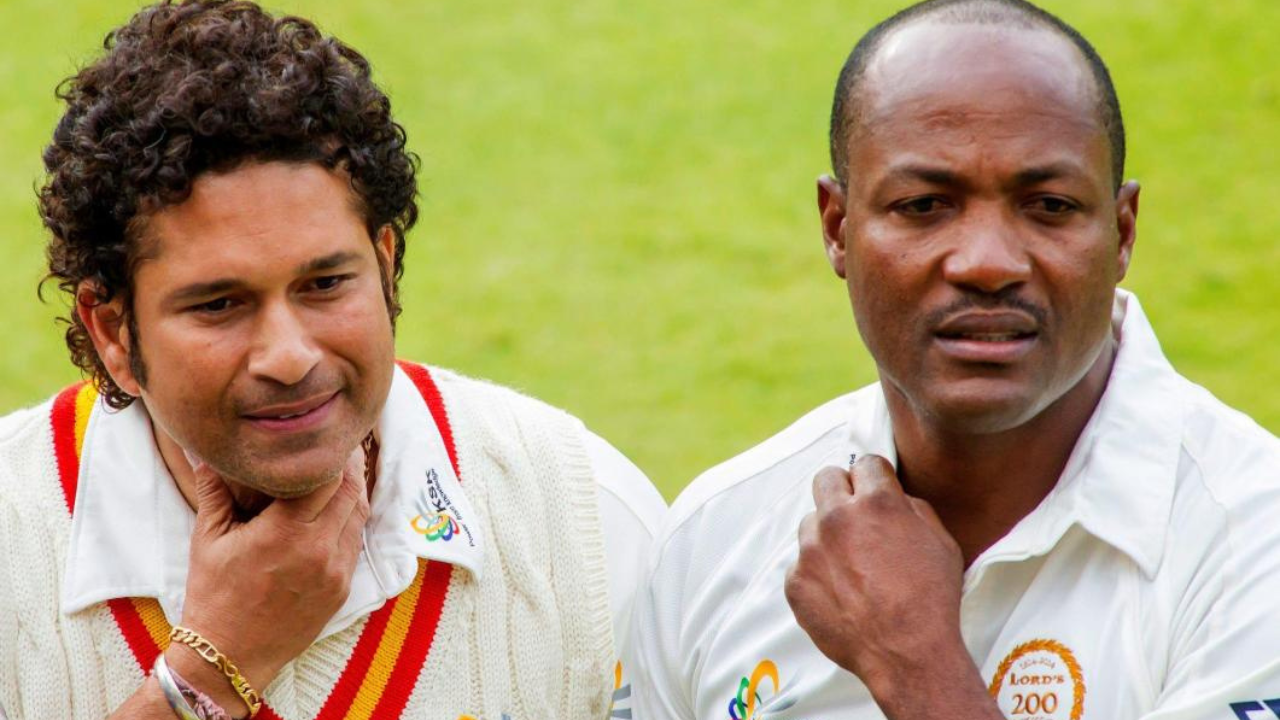
If you ask cricket fans from the 90s what they remember most about this rivalry, most will bring up two names immediately: Sachin Tendulkar and Brian Lara.
These two batters basically turned every match into a personal contest. Tendulkar handled fast bowling with a calm that felt almost unfair. Lara, on the other hand, could destroy spin bowling in a way that left commentators searching for words. Whenever India and West Indies played during this period, fans weren’t just watching two teams. They were watching two legends try to outdo each other.
It didn’t always decide who won the match, but it made every game worth watching.
Once T20 cricket picked up steam, this rivalry found a new gear entirely. Both teams had exactly the kind of players this format rewards, big hitters who could clear boundaries without much backlift, and bowlers who could adapt on the fly.
Matches between these two sides in T20s have often turned into last-over thrillers, which is exactly why fans keep tuning in whenever they meet in a World Cup.
What Happened Recently
Fast forward to late 2025, and the West Indies toured India for a two-match Test series. It didn’t go well for the visitors.
Match
Result
Venue
Dates
1st Test
India won by an innings and 140 runs
Ahmedabad
Oct 2 to 4, 2025
2nd Test
India won by 7 wickets
Delhi
Oct 10 to 14, 2025
Ravindra Jadeja had a standout series, scoring a century and picking up eight wickets across the two Tests, which earned him the Player of the Series award. Yashasvi Jaiswal finished as the leading run scorer with 219 runs, while Kuldeep Yadav topped the wicket charts with 12.
Then in March 2026, the two sides met again, this time in the T20 World Cup Super 8 stage at Eden Gardens, Kolkata. It was a virtual quarter-final, and the pressure showed. West Indies posted 195 for 4, built around a late partnership between Rovman Powell and Jason Holder.
India were left needing a big chase, and Sanju Samson delivered exactly that, finishing unbeaten on 97 off just 50 balls to guide India home by five wickets with four balls to spare. It remains one of the highest successful run chases in T20 World Cup history and sent India through to face England in the semifinal.
Why This Rivalry Still Matters
At this point, India and the West Indies have played each other across generations, formats, and continents. The overall head-to-head numbers reflect just how competitive this contest has stayed over time.
Head-to-Head:
Format
Matches Played
India Wins
West Indies Wins
Tests
102
25
30
ODIs
142
72
64
T20Is
31
20
10
This is the uniqueness that the West Indies are still ahead in Tests – something that will come as a surprise to the fans who have only seen the dominance of India in the present day. It’s a reminder of the force of that Caribbean side and how much time it must have taken India to catch up on that early lead.
Final Word
There’s no such thing as an era or a great player to have this kind of rivalry. It’s a story that has been written in snatches, decade by decade, by such names as Gavaskar, Lara, Tendulkar, and now, Samson and Jadeja. Each time these two teams play on the field, there’s history there and that’s why fans still come out for it.
This is the official Editor account and in charge of maintaining all the content in the website. Team Captionall research high quality accurate content & write SEO friendly content to ensure the quality content for our visitors. For any query & support please contact with our support team. Thank you for visiting captionall.com.